Supreme Court agrees to review the 1868 federal ban on distilling spirits at home
Breaking the ban can mean 5 years in prison and a $10,000 fine. Making beer and wine at home has been legal for decades.
The story
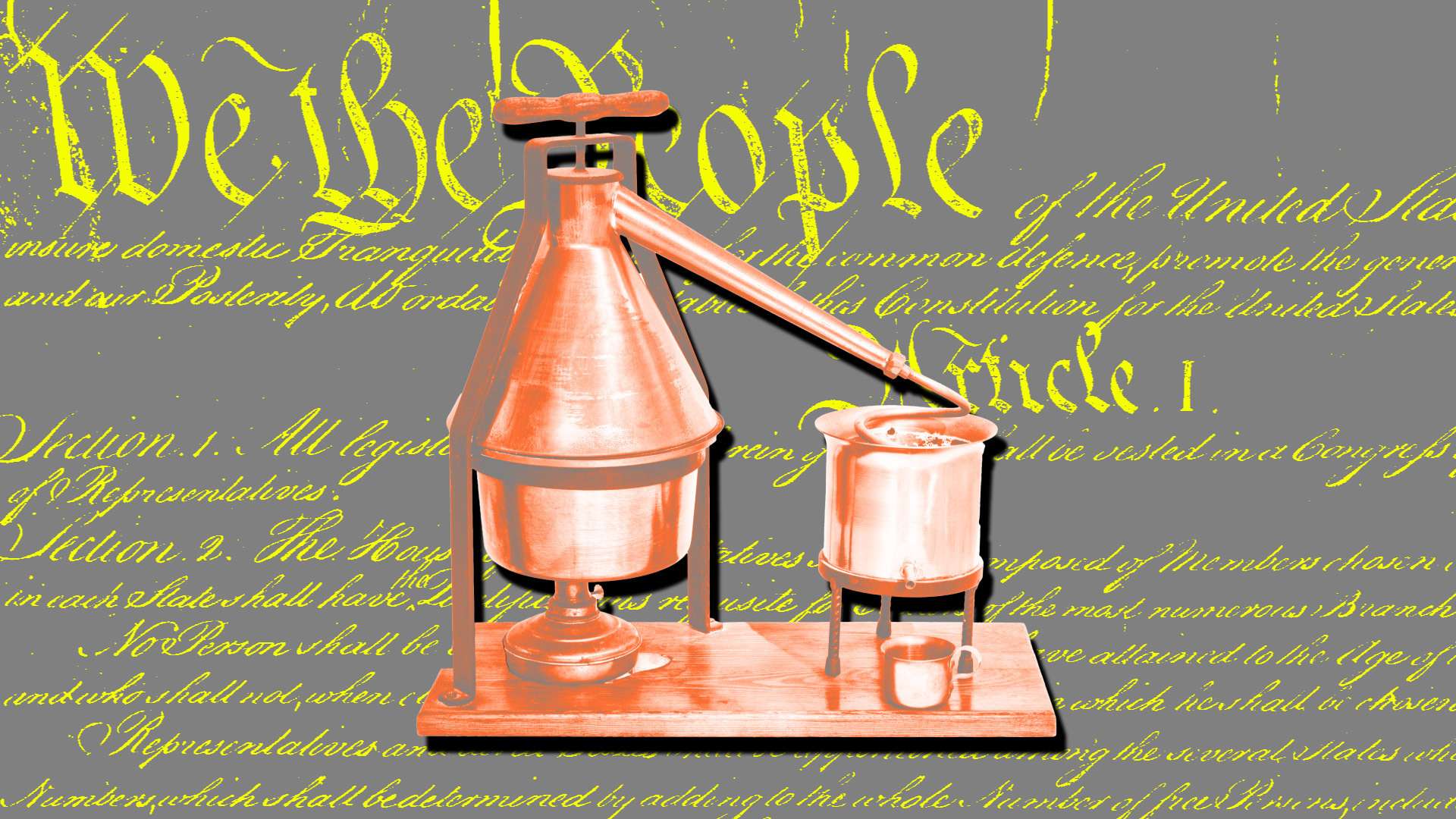
Making whiskey at home can bring up to 5 years in prison and a $10,000 fine, AP reported. On Oct. 19, the Supreme Court agreed to decide whether that 1868 ban is constitutional.
- The Reconstruction-era ban covers distilling in any house, shed or yard, CNN and NBC reported.
- The Hobby Distillers Association, based in Texas, sued along with some members. One member used a home still to make fuel alcohol, NBC reported.
- In April, two appeals courts split, 11 days apart, AP reported. The Fifth Circuit said the ban falls outside Congress's taxing power. The Sixth Circuit upheld it in a case brought by John Ream, an Ohio brewpub owner.
- The government says Congress limited where spirits are made to stop tax evasion. It said $6 billion in liquor tax was collected in 2024, CNN reported.
- The challengers say the ban raises no revenue, AP reported. Their lawyer Robert Alt said the founders "would be rolling over in their graves."
- The Court will weigh only the Necessary and Proper Clause, Reason reported. The government argues a law qualifies if it is "convenient" or "useful" for a power Congress holds, the Daily Wire reported.
- CNN expects a ruling next year. Outlets differed on whether the Court also took Ream's own appeal.
- The same day, the Court declined to review Trump's firing of labor board member Gwynne Wilcox, Reuters reported.
How each side told it
The left played it light. NBC ran: "High spirits: Supreme Court to decide fate of federal ban on home distilling." Its first paragraph framed the news as welcome to would-be distillers. It noted that home beer and wine are legal in paragraph 3. CNN ran: "Can you make whiskey at home? The Supreme Court will decide." It opened on Ream and added George Washington and the Whiskey Rebellion. CNN also quoted a spirits industry group on the risk of explosions and fires.
What got buried
NBC reported, in paragraph 11, that a win would still leave rules in place. Home distillers would have to register their stills and pay federal excise tax on spirits made for their own use. In the six reports we read, only NBC said so. CNN alone reported that one association member got a letter threatening a $500,000 fine, and that violators can forfeit their homes.
Why it matters to you
Today, if you distill spirits at home, you risk up to 5 years in prison and a $10,000 fine, AP reported. CNN said you could also lose your home. Some states, such as West Virginia since 2024, allow home distilling. That state law does not protect you from the federal ban, NBC reported. A ruling would apply nationwide. Even after a win, you would register your still and pay excise tax, NBC reported. Until the Court rules, the federal ban stands, and beer and wine stay the legal options at home.
Old laws stay on the books until someone tests them.
All coverage
 Can you make whiskey at home? The Supreme Court will decide
 High spirits: Supreme Court to decide fate of federal ban on home distilling
 Supreme Court Takes Up 158-Year-Old Ban On Home Distilling
 Supreme Court agrees to review a Reconstruction-era ban on distilling spirits in private homes
 Supreme Court Will Hear Necessary and Proper Clause Case on Federal Law Banning Home Distilleries
 SCOTUS To Hear Disparate Impact, At-Home Distilling Ban Cases
 Home distillers fight to make backyard booze legal
What we read to write this
- Associated Press (via News4JAX) Supreme Court agrees to review a Reconstruction-era ban on distilling spirits in private homes
- CNN (via KION) Whiskey rebellion over 1868 law on home distilleries heads to the Supreme Court
- NBC News High spirits: Supreme Court to decide fate of federal ban on home distilling
- The Daily Wire Supreme Court Takes Up 158-Year-Old Ban On Home Distilling
- Reason (Volokh Conspiracy) Supreme Court Will Hear Necessary and Proper Clause Case on Federal Law Banning Home Distilleries
- The Federalist SCOTUS Takes Up Cases On Race and School Admissions, Federal At-Home Distilling Ban
- Reuters (via The Daily Record) US Supreme Court won't review Trump's firing of labor board member
Loading the discussion.